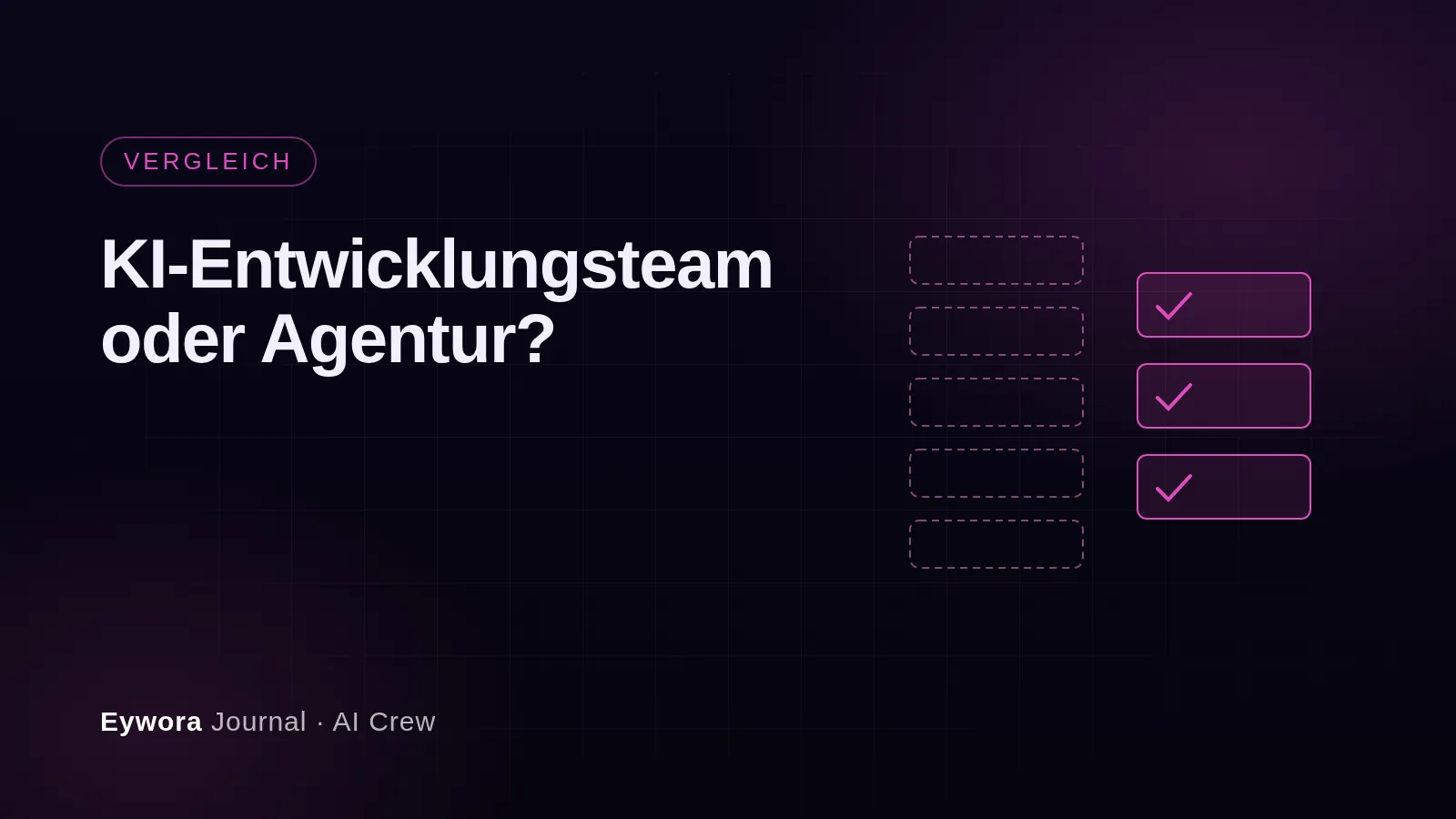
- answers with text and code snippets
- does not know your shop
- installing and testing stays with you
- nothing is documented
- reads the code of your shop
- changes it on a copy
- tests automatically and shows a preview
- every change is versioned
Ask an AI assistant today how to set a minimum order value per customer group in Shopware and you get a usable answer within seconds, often including code. The problem starts afterwards: who installs the code, who checks that it works with the theme and the installed plugins, who tests the checkout, and who will remember a year from now what was changed back then? This is exactly where an AI agent differs from a chat assistant.
The definition in one sentence
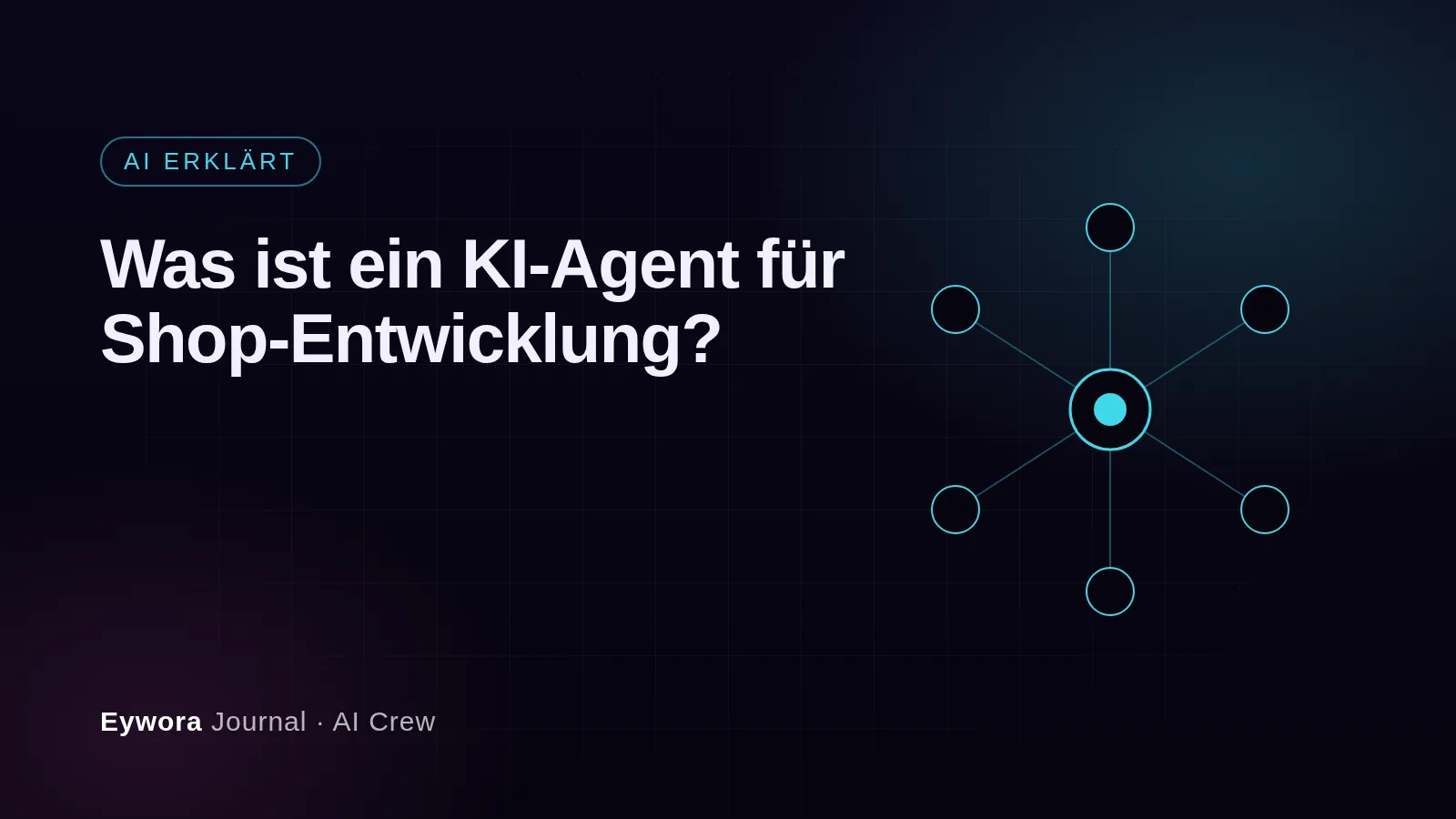
An AI agent for shop development is an AI system that accepts an order in plain language, reads the code and configuration of a shop by itself, makes changes on a copy, tests them and presents the result for approval together with traceable documentation. The difference to an assistant is not the intelligence of the language model but the access to tools: file system, database, test environment, version control. An assistant talks about your shop. An agent works inside it.
What an agent actually does
Take a typical order: "In the checkout, the company field should be mandatory for business customers." An agent handles this in four steps. First it reads how the checkout is built in this particular shop: which version is running, which theme, which plugins hook into the checkout, whether a customer group for business customers already exists. Then it plans the smallest intervention that reaches the goal and prefers the built-in features of the system over custom code. Only then does it change code or configuration, in a way that updates of the shop system will not overwrite: as a plugin in Shopware, as a separate plugin or child theme in WordPress, in the site package in TYPO3. Finally it tests: does the checkout still load, is the field mandatory for business customers and optional for private ones, does the order arrive correctly. The result reaches you as a preview.
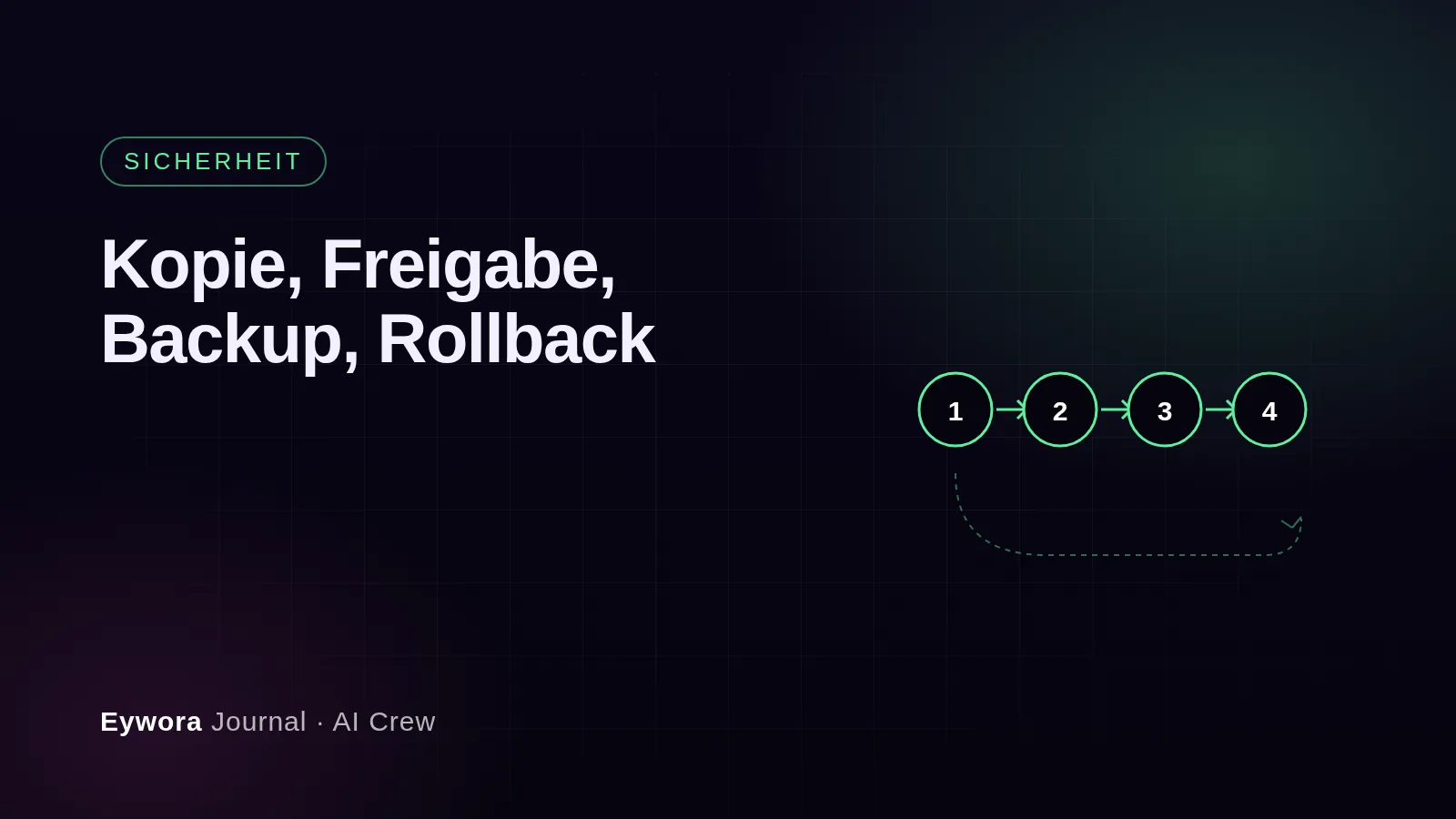
All of this happens on a copy of your site, never on the live system. That is not a precaution you can switch on; it is the foundation of the way of working. How this copy, the approval and the rollback work together is described in the article Copy, approval, backup, rollback.
Why a team of agents rather than one
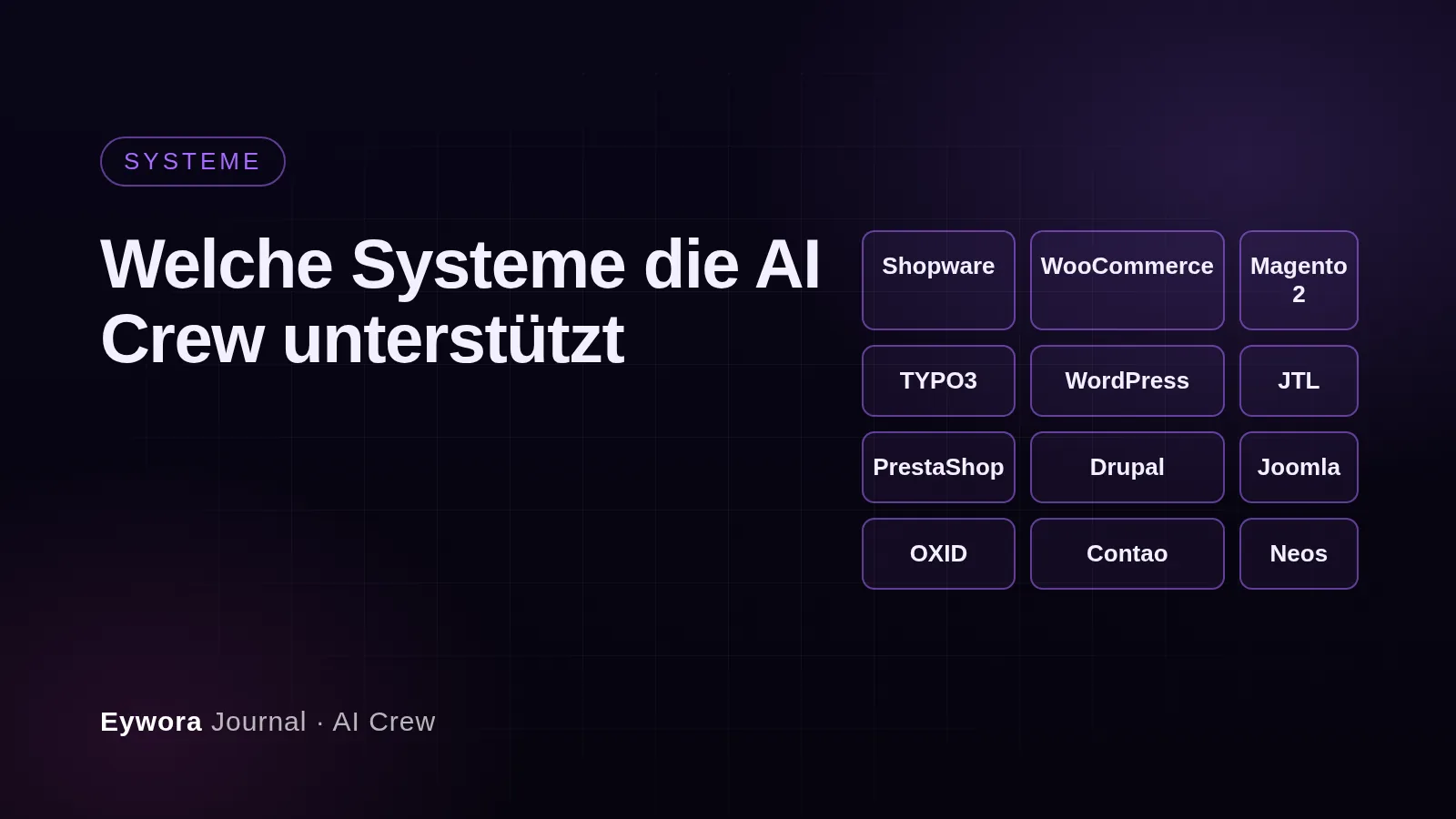
A single language model that writes code, checks security questions, estimates costs and writes copy at the same time makes compromises in every one of these roles. The Eywora AI Crew therefore works as a team of 16 agents with clearly separated tasks. An AI team lead accepts the order and breaks it down. An agent for integrations and systems knows the particularities of Shopware, WordPress, TYPO3 and the other supported systems. A designer checks whether a new feature fits the existing interface. An agent for security and privacy looks at every change before it goes into the preview. An agent for cost estimates tells you in advance what to expect. A release manager takes care of backup and go-live. Add agents for copy and translations, for tests and for documentation.
This division of labour has a practical advantage: each agent only gets the context it needs for its role and can review the work of the others. A code review by a second agent finds errors the first one does not see, much like the four-eyes principle in a human team.
What an agent does not decide
An agent does not decide whether something goes live. That decision stays with you: you see the result in a preview of the copy, approve it or give feedback. An agent also does not build a shop from scratch and does not migrate to another platform. It is not the technical skills that are missing, but the many decisions and alignments such a project requires. And for very large version jumps, such as moving to a new major version, it pays to have people check whether a separate project makes more sense. At the Eywora AI Crew, the team of signundsinn GmbH stands behind the agents as the safety net.
What this means for shop owners
For owners of an existing shop or website, one thing changes above all: the small tasks that otherwise pile up for months, because a quote and an appointment are not worth it for each of them, can simply be described and tested the same day. You do not need programming skills for that. You need a clear description, a look at the preview and a decision. The answers to the most frequent questions, from costs to contract term, are in the FAQ on the Eywora AI Crew.
Sources
- Eywora, FAQ on the AI Crew: What is an AI development team, how does the AI Crew work step by step – https://www.eywora.com/en/faq/ai-crew/